
Geophysical Imaging and Monitoring
Marijn Beugelsdijk
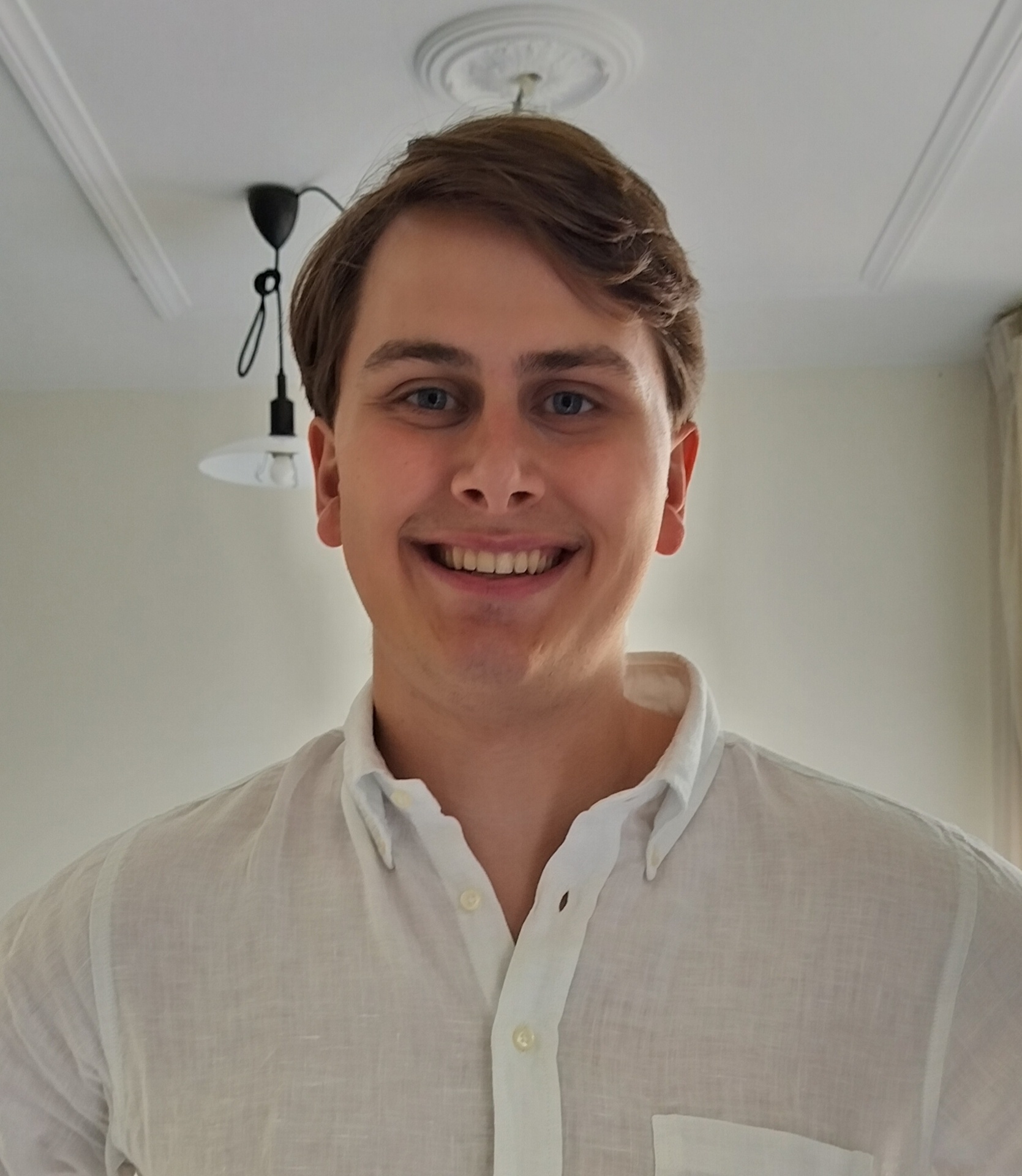
Marijn Beugelsdijk
Student assistantMarijn Beugelsdijk
Geophysical Imaging and Monitoring
RWTH Aachen University
Wüllnerstr. 2 (Bergbaugebäude)
Room: 504a
52062 Aachen
Research Interests
- Environmental geophysical imaging and monitoring
Professional experience
| since Oct. 2025 | Student assistant and M.Sc. Thesis at the Geophysical Imaging and Monitoring group at RWTH Aachen University |
| Aug. 2025 – Oct. 2025 | Research assistant for the Centre for Geophysical Forecasting at NTNU Trondheim |
Education
| since 2024 | IDEA League, Joint Master Applied Geophysics (M.Sc.) at TU Delft, ETH Zürich and RWTH Aachen University |
| 2020 – 2024 | Earth Sciences (B.Sc.) at Utrecht University |
Publications
-
Demonstration of seismic monitoring of CO2 storage using a 3D acoustic laboratory
2025 |
International Journal of Greenhouse Gas Control, doi:10.2139/ssrn.5706813
Note: This publication contribution resulted from Marijn Beugelsdijk's work prior to GIM and is still being peer reviewed.Abstract
Accurate monitoring of injected CO₂ plumes is an important tool for ensuring the success and safety of carbon capture and storage (CCS) operations. While seismic monitoring and flow forecasting are established tools for managing storage sites, field-based studies come with limitations in terms of costs, uncertainties and logistical constraints. Laboratory experiments provide a valuable complementary approach by enabling precise experimental controls and real-world physics with a high degree of customization. Here, we present a new laboratory facility designed for lab-scale seismic monitoring of CO₂ storage. The setup includes a downscaled (1:2000) replica of the Utsira Formation caprock in the Sleipner CO₂ storage site, monitored with an ultrasonic system of 128 transducers, functioning as both sources and receivers. Using air as a proxy for CO₂, “4D seismic” data were acquired and processed using conventional reflection seismic techniques. The results demonstrate the successful detection of the gas plume evolution and topographic imaging of the aquifer top-layer. Furthermore, the facility enables direct testing of novel seismic techniques and plume monitoring strategies under highly controlled and flexible conditions, offering a scalable and adaptable platform for future CCS research.
Cite as
Hunnestad, Kasper and Rørstadbotnen, Robin Andre and Netland, Tim Cato and Landrø, Martin and Beugelsdijk, Marijn and Avdal, Jørgen and Arntsen, Børge and Ringrose, Philip and Carraux, Guillaume and Lleyda Moltó, Claudi and Elster, Anne C. (2025): Demonstration of seismic monitoring of CO2 storage using a 3D acoustic laboratory. International Journal of Greenhouse Gas Control. https://doi.org/10.2139/ssrn.5706813