Andrea Balza Morales successfully finished her PhD

Posted on 2025/12/18
© Emilie Lemaire (LIH, RWTH)
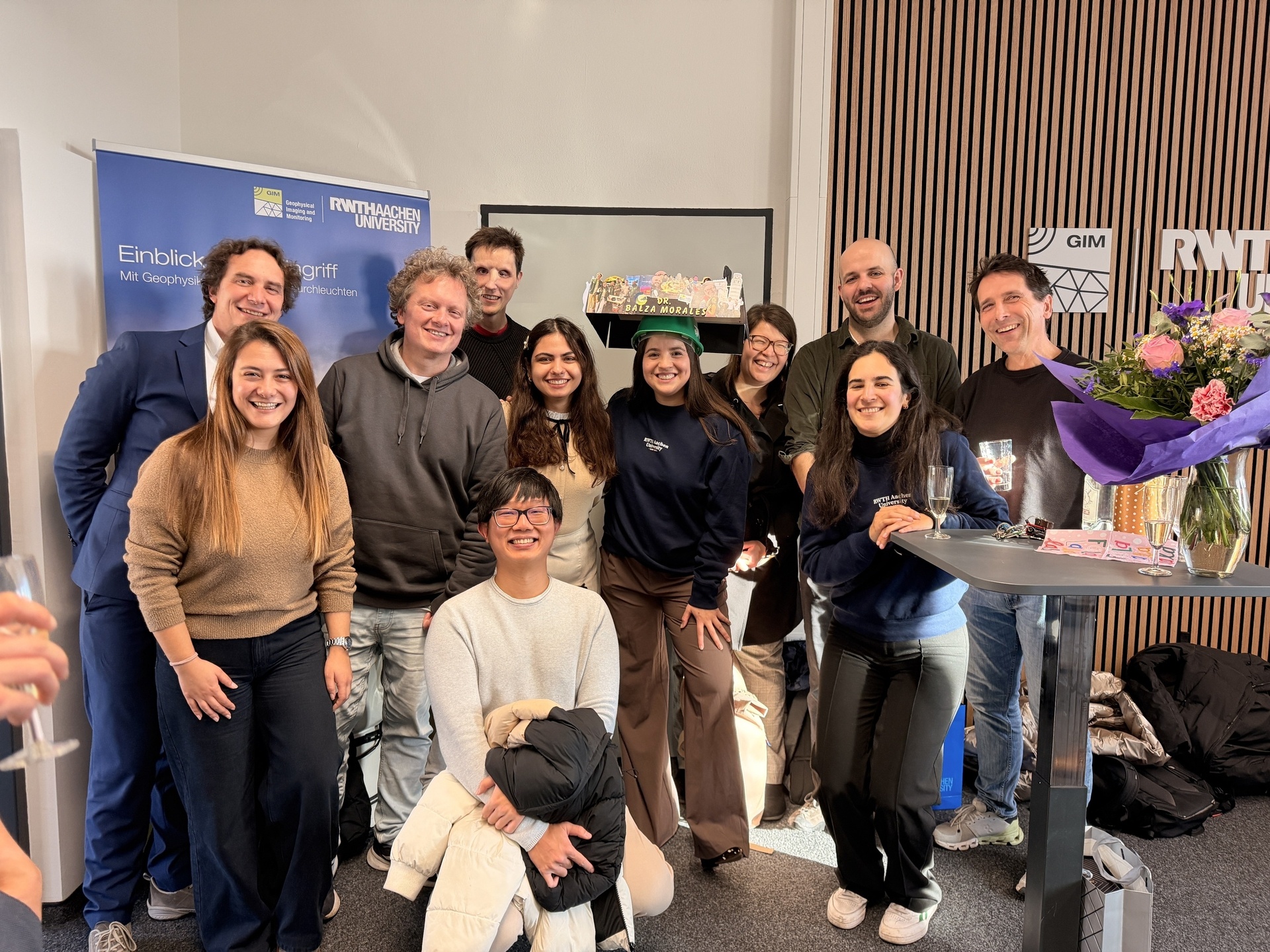
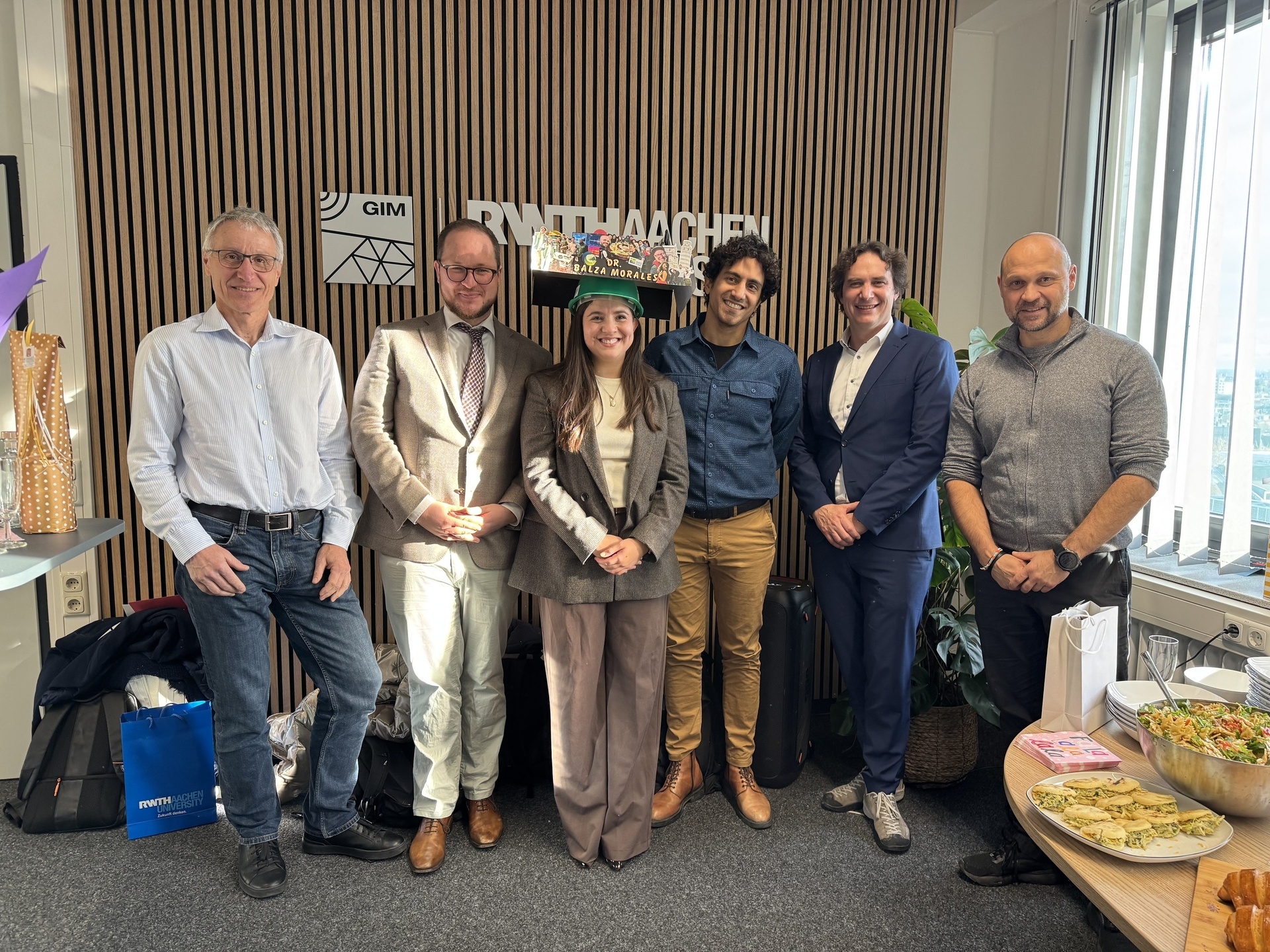
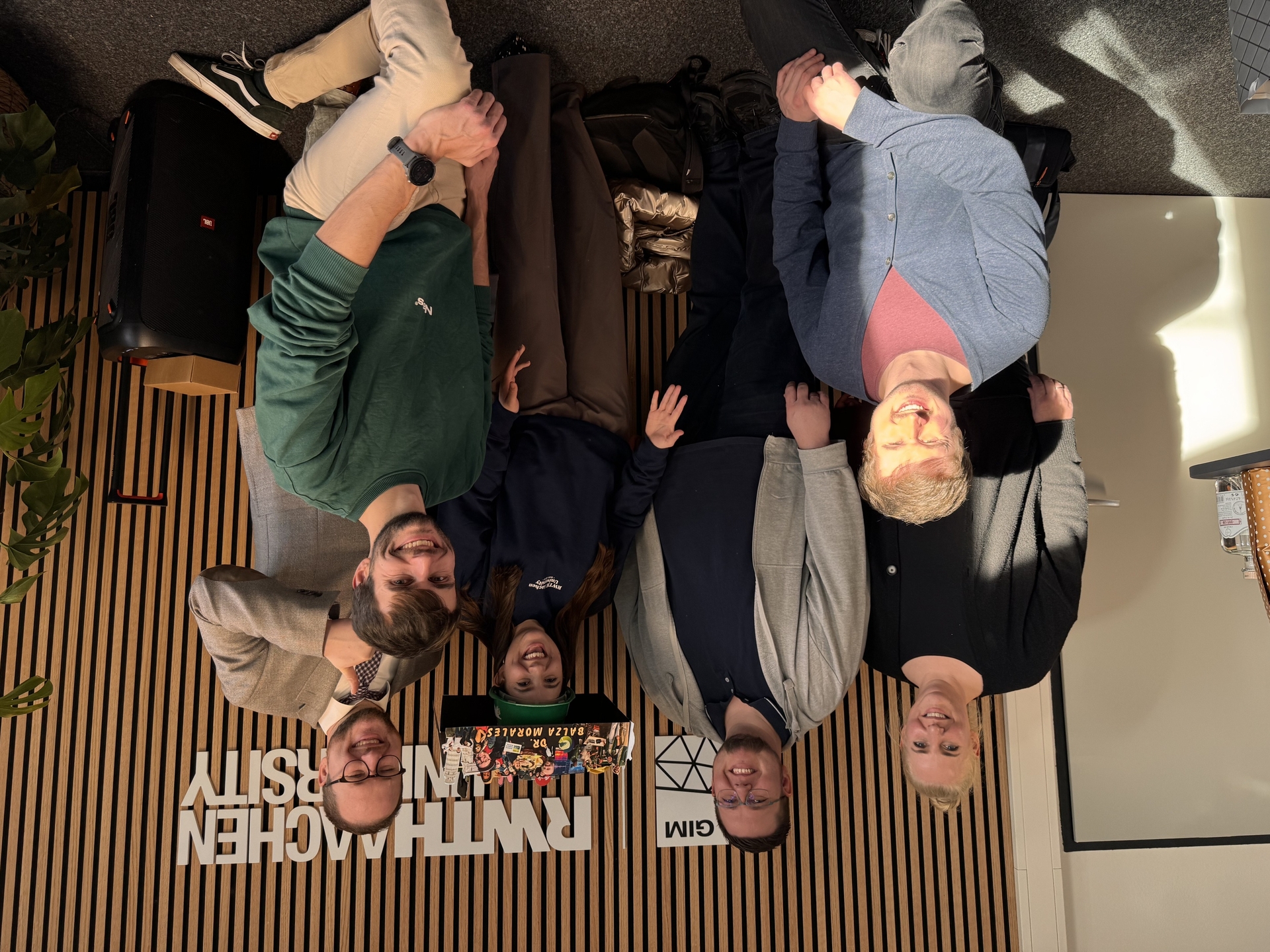
Dr. Balza Morales and some GIM colleagues.

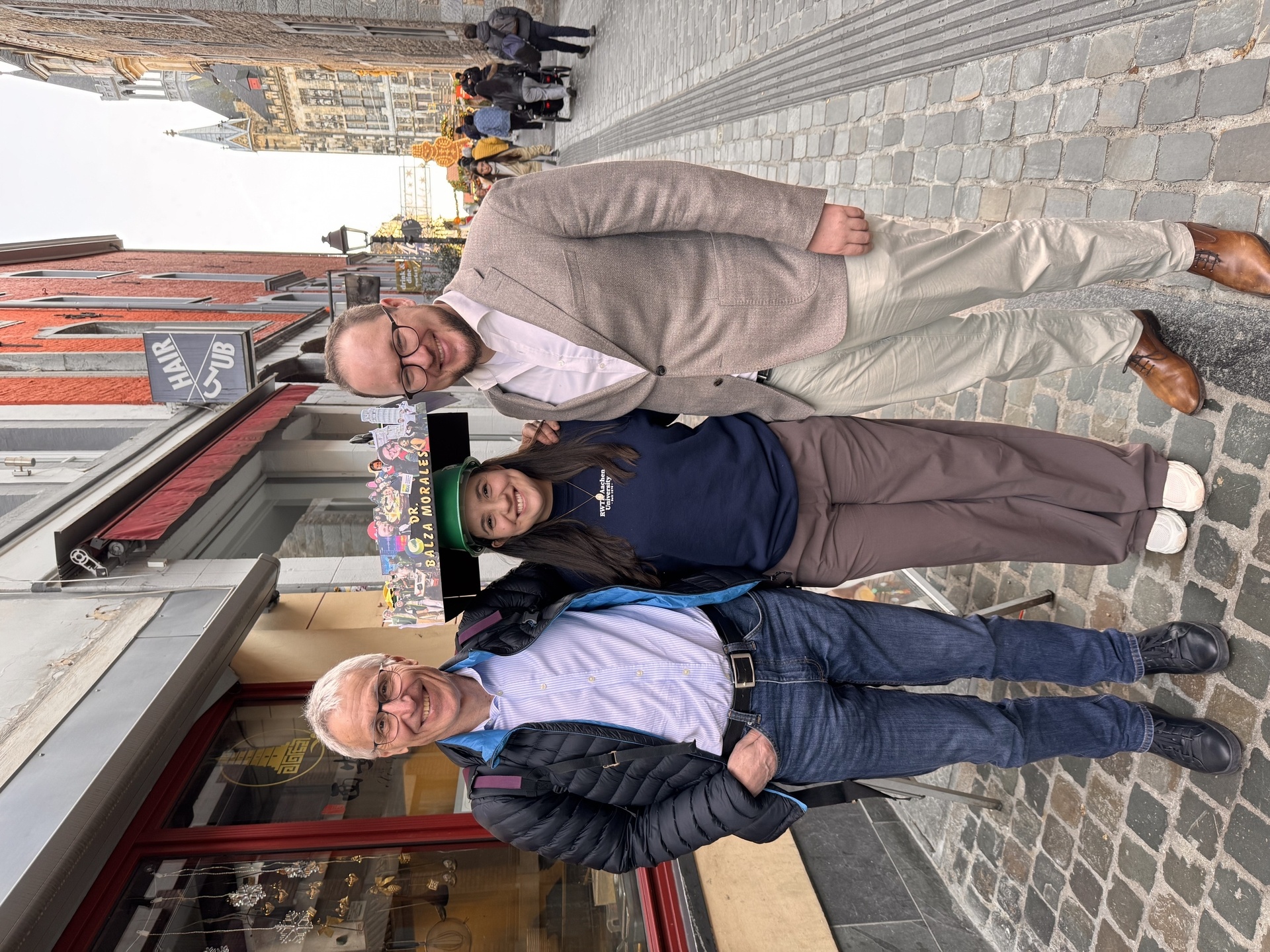
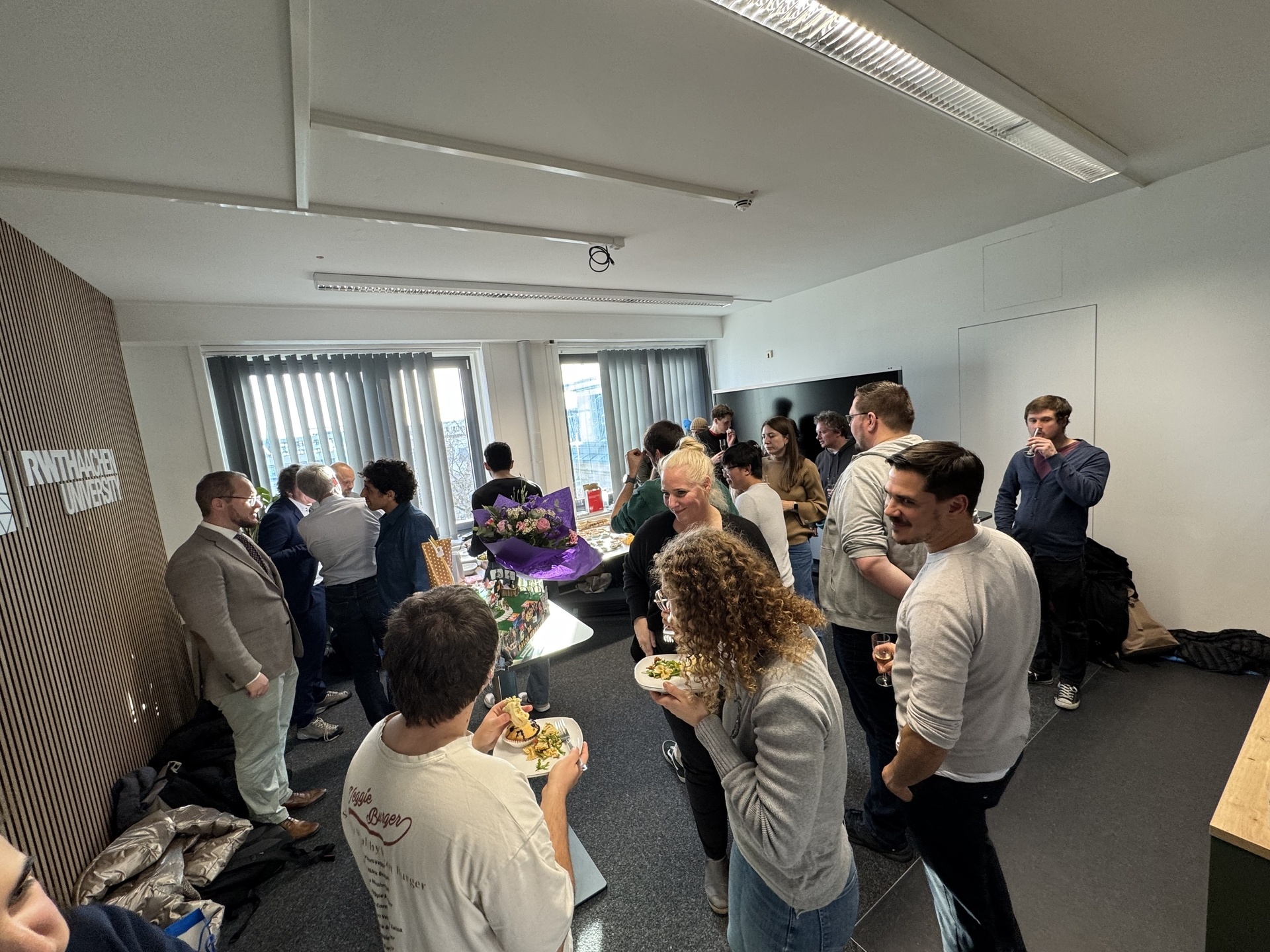
Andrea Balza Morales has successfully defended her PhD thesis on December 18, 2025, as the first doctoral student of the Geophysical Imaging and Monitoring group!

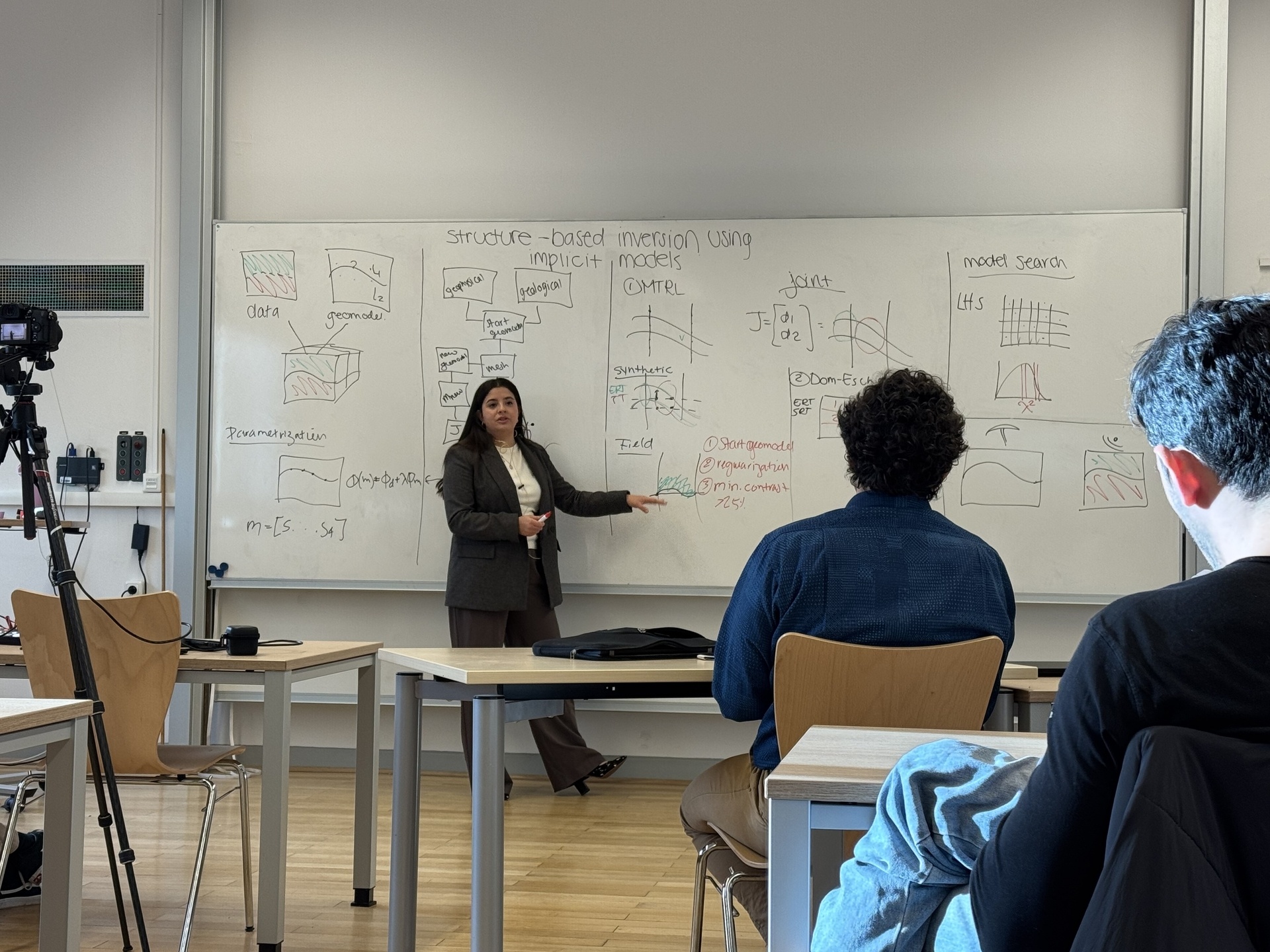
Andrea has submitted a thesis titled “Preserving geological realism: Integrating implicit geomodeling in deterministic geophysical inversions”, which she has worked on in the frame of the EU innovative training network EASYGO. She has developed a structure-based (joint) inversion framework, which can invert various geophysical data sets honoring geological realism by integration of the implicit geomodeling engine GemPy with the geophysical toolbox pyGIMLi.

The main part of her work was recently published in the Geophysical Journal International:

  • Structure-based geophysical inversion using implicit geological models

    2025 | Balza-Morales, A., Förderer, A., Wellmann, F., Maurer, H., Wagner, F. M.

    Geophysical Journal International, doi:10.1093/gji/ggaf445

    RWTH Publications PDF

    Abstract

    Interpreting geophysical inversion results across diverse applications presents significant challenges, particularly when the resulting images lack distinct, sharp interfaces. Incorporating prior information to constrain the inversion process introduces additional complexity, especially when this prior information itself contains uncertainties. This work explores methods for improving the geometric representation of geologic structures using integrated geophysical and geologic models. While many existing approaches are either data-driven or model-driven techniques, they often fail to fully integrate available data into a dynamic, unified geomodel. We present an approach that integrates geologic models and geophysical data through structure-based inversion. Our approach preserves geological realism through an implicit model while imaging sharp contrasts within the geophysical inversion models. To address the ambiguities of solving for both the geometry and physical parameters, we adopt a sequential inversion process, first resolving shifts of geologic interfaces, then inverting for geophysical parameters using the updated geometry as a structural constraint. The method’s efficacy is demonstrated through cross-hole traveltime tomography using two synthetic and one field data set from the Mont Terri Rock Laboratory. The field data results validate the capability of our approach to recover subsurface interface geometries from geophysical data that are comparable to the interpolated interfaces from borehole data. While we demonstrate the method for seismic traveltime data in cross-hole geometry, the flexible open-source implementation allows application to 3-D scenarios and other geophysical methods.

    Cite as

    Balza-Morales, A. and Förderer, A. and Wellmann, F. and Maurer, H. and Wagner, F. M. (2025): Structure-based geophysical inversion using implicit geological models. Geophysical Journal International. https://doi.org/10.1093/gji/ggaf445

We thank the other supervisors and committee members Prof. Hansruedi Maurer and Dr. Alexis Shakas from ETH Zurich and Prof. Florian Wellmann and Prof. Florian Amann from RWTH Aachen.

We congratulate Andrea and wish her nothing but the best for her personal and certainly bright professional future!


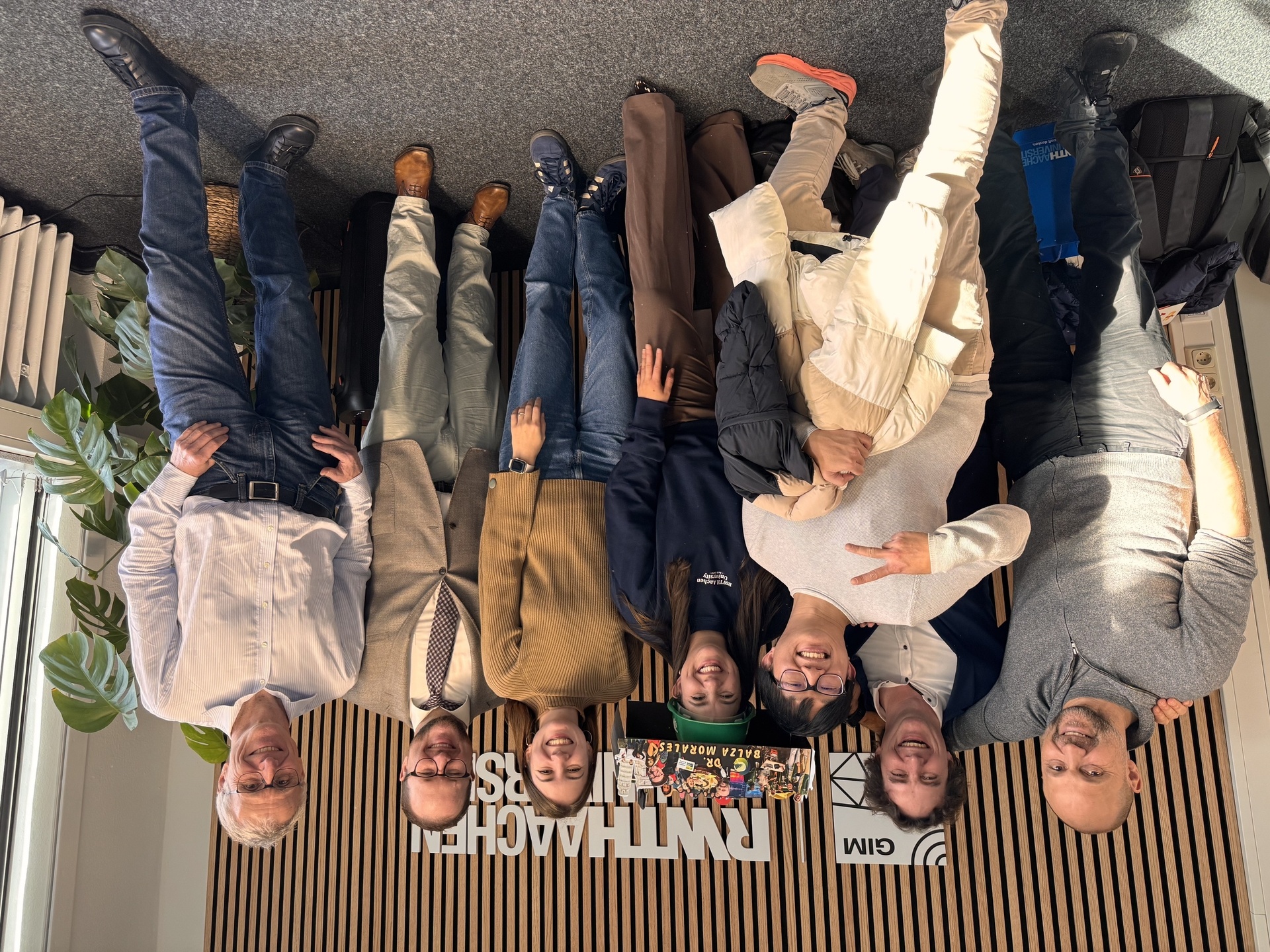
Impressions from the PhD defense

Back to news overview